
 Polski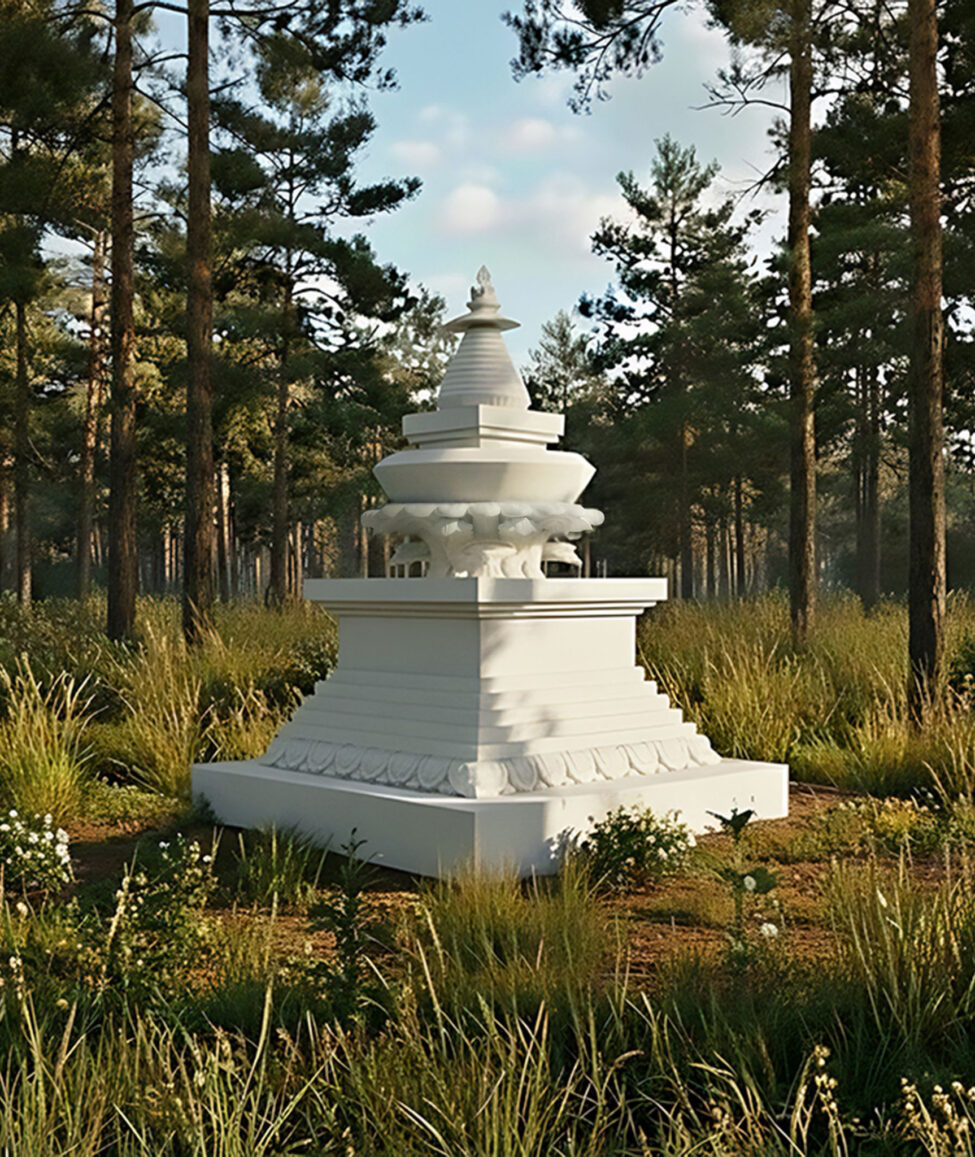
ཨུ་དཔལ་གླིང་སྐོར་མཆོད་པའི་རྟེན།
U pal ling khor chiu pei ten
Harmony of the Elements, Healing of the Natural World
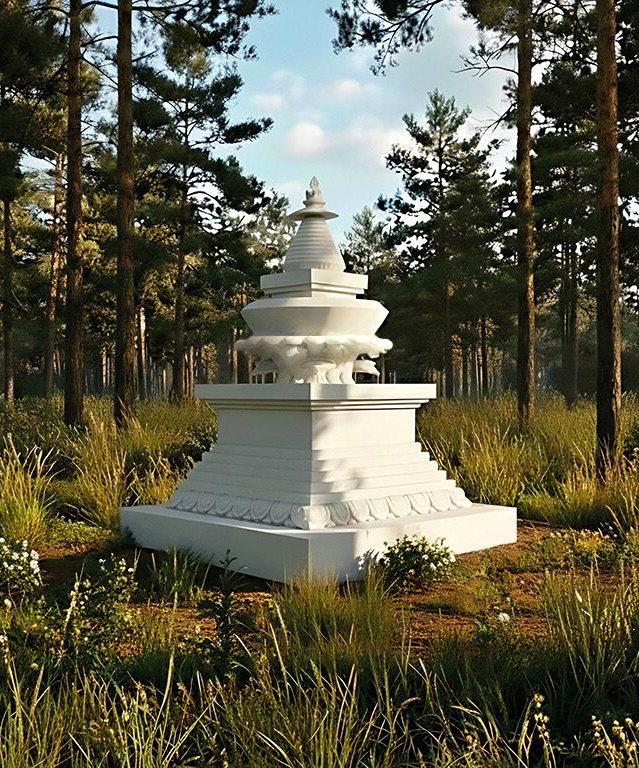
At the Chamma Ling center of the Drenpa Namkha Foundation, a unique stupa dedicated to the Nagas (Lu) is being created—beings connected with the elements of water and earth, guardians of springs, lakes, and trees, who have watched over the balance of nature for centuries.
This project, inspired by the teachings of Tonpa Shenrab Miwo, the founder of the Yungdrung Bon tradition, is one of the first undertakings of its kind in this part of the world. Its aim is to restore harmony between human beings and the natural world—between the visible realm and the subtle kingdom of the elements.
The idea of building a Naga Stupa emerged several years ago thanks to Tomek Radek, founder of the Foundation. He was the first to recognize the need for such a place in Wilga and began gathering guidance on its form and meaning. We continue what he initiated, with the same respect and intention.
Spiritual Guidance and Collaboration
The project is being carried out in cooperation with Ligmincha Poland. Its spiritual caretakers are Geshe Gyatso and Geshe Sherab Palden.
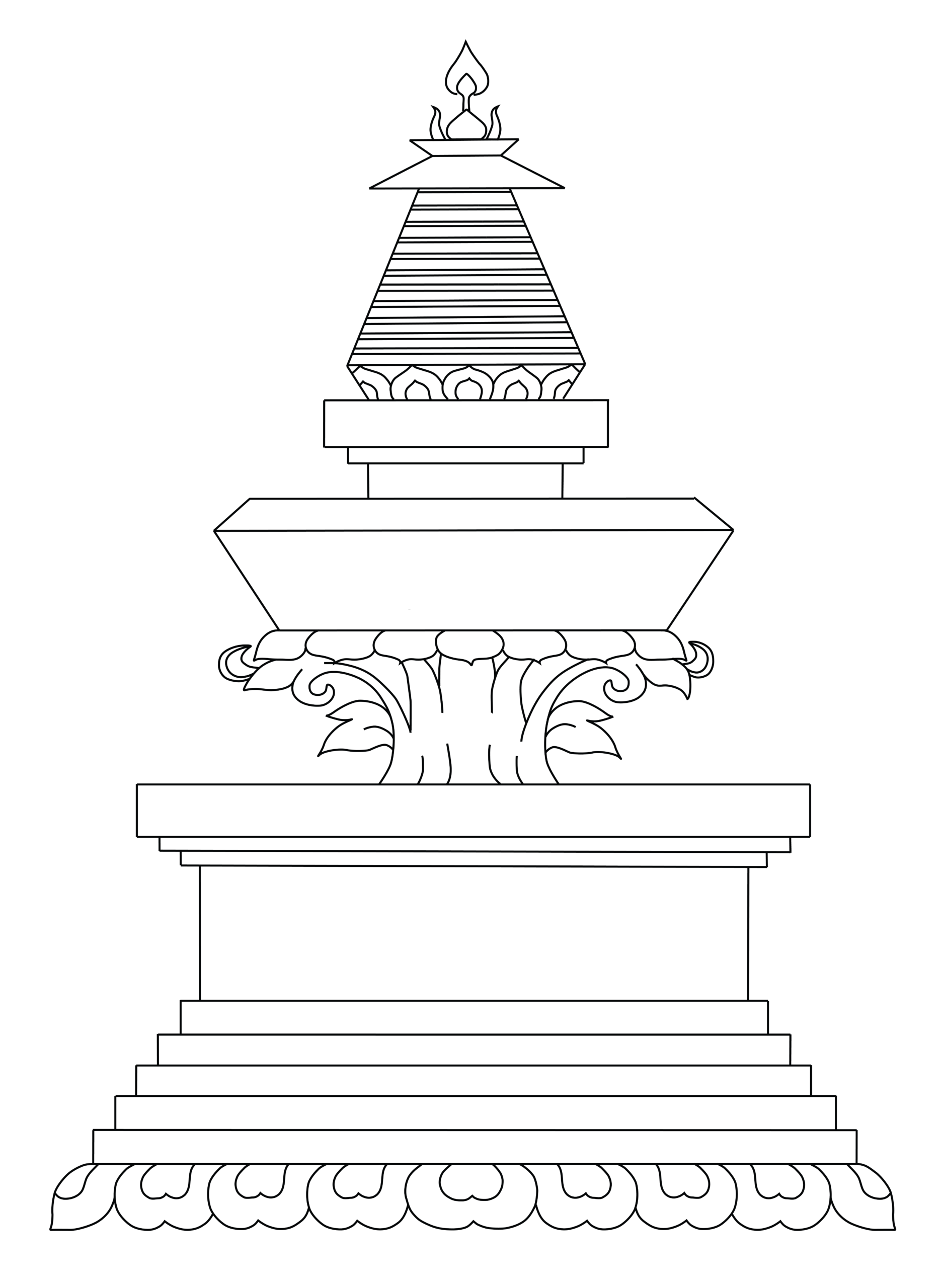
During the design phase, Ponlop Menri Trinley Nyima Rinpoche offered invaluable support, providing essential guidance and verifying the project’s alignment with the traditional description of a Naga stupa presented in the Dri-me Zi-jid text taught by Tonpa Shenrab.
We also receive extraordinary support from Khenpo Nyima Kunkyap Rinpoche, an eminent specialist in stupa construction. His knowledge and experience are invaluable—he has consulted with us on the structure of the stupa, its proportions, the method of filling it, and all the rituals that must precede the construction.
Why a Naga Stupa?
In the Bon teachings it is said that when the natural environment is harmed—when waters become polluted, the earth is disturbed, and forests are destroyed—the balance between the human world and the world of the Nagas is disrupted.
Then illness, drought, disasters, and conflicts arise.
Building a Naga Stupa is a spiritual response to these conditions: an act of healing, reconciliation, and gratitude toward the earth that sustains us.
The stupa will become a place of peace and blessing for the Nagas—beings who help maintain the elemental harmony of water and earth.
Inside, sacred texts, relics, mantras, and special Naga vases filled with blessed substances will be placed.
The entire structure of the stupa—from the lotus base to the summit of Mount Meru—is a symbolic representation of harmony between sky, earth, and water.
Every part reflects an aspect of enlightened body, speech, and mind.
Rituals Preceding Construction
The process of building the stupa is preceded by purifying and blessing rituals.
Among them is Sa-long, the ritual request for permission from the spirits of the place (Lu, Sadak, Nyen), and the ceremony of subduing the three poisons—anger, attachment, and ignorance.
Only after the space has been properly prepared does the actual construction begin.
Inside the stupa, nine Naga prosperity vases (Lu bum) will be placed, filled with blessed substances, herbs, sacred texts, and relics.
The entire process will be completed with a consecration ceremony (Rabné), which awakens the stupa as a living body of compassion, wisdom, and healing.
Construction Timeline
-
Spring 2026 – beginning of construction
-
2026–2027 – rituals, building work, preparation and installation of the interior
-
2027 – completion of the project with the consecration ceremony (Rabné)
Project Cost
The total cost of building and filling the stupa is 65,000 PLN.
This amount includes:
-
construction work
-
all ritual preparations
-
Naga vases
-
herbs, mendrup, and relics
-
Lubum texts and the entire interior preparation
The Meaning of the Project
The construction of a Naga Stupa in Chamma Ling is not only an act supporting the harmony of the space—it is also a continuation of the vision present at the very beginnings of the Foundation.
It is a way to care for the natural environment while quietly and gratefully honoring those who contributed to the development of this place.
The Naga Stupa is also the material expression of the ancient Lutor practice—the water offering ritual meant to purify the relationship between humans and the beings of nature.
Offering water symbolizes purity of intention, generosity, and a willingness to repair the harm done to the natural world.
The completed stupa will become a place where this practice can be performed regularly—a continuous offering, a prayer rooted in stone, earth, and blessed water.
Today’s world increasingly feels the consequences of losing its connection with nature.
Climate change, pollution, spiritual exhaustion—these are all signs of the same wound of separation.
The Naga Stupa arises as a reminder of the unity of all elements.
A place that teaches gratitude toward the earth and respect for the subtle beings who share this world with us.
May this stupa bring peace to the Nagas and to all people.
May it purify the waters, calm the winds, and fill hearts with compassion.
May it become a blessing for the environment and for all beings who dwell within it.
A Shared Offering
The construction of the Naga Stupa in Chamma Ling is a collective work of heart and prayer.
Anyone who wishes to support this undertaking—through material donation, prayer, or a good wish—becomes part of this offering for the natural world and all its beings.
We warmly invite you to co-create this place of harmony and healing.
Supporting the Project
If you would like to support the construction of the stupa, donations may be made to the Drenpa Namkha Foundation:
with the note: “donation – Naga Stupa”
Drenpa Namkha Foundation
ul. Malmeda 5, 15-440 Białystok
SWIFT code: NESBPLPW
Account in PLN:
PL 55 2530 0008 2012 1079 0186 0001
SWIFT code: NESBPLPW
Thank you for every form of support—material, prayerful, and through good wishes.